

The Essential Toolkit: A Guide for Aspiring Commercial Photographers By Adarsh Nareda
Updated: Nov 7, 2025

Hello and welcome back to the blog, everyone! I'm Adarsh Nareda, a commercial photographer that works in creating visuals that convey a brand's story telling. I'm frequently asked about what gear I use and what anticipated photographers should buy. My point of view is straightforward: having the right tools to understand your creative vision is more necessary instead of having the priciest equipment.
I've understand firsthand how modern tools can enhance your work because I use a Canon EOS R5. However, a top-notch camera body is only the beginning. Let's breakdown what is required for putting together a professional kit.
1. The Camera Body: Your The foundation
The foundation of your business is your camera. My Canon EOS R5 is a powerful tool for commercial work because of its 45-megapixel sensor, superb low-light skills, and amazing autofocus. Look for these important characteristics when you're prepared to invest:

High Megapixel Count: This is crucial for commercial work, as clients often need to use images for large-format prints, billboards, or high-resolution web displays.
Excellent Autofocus: Fast and accurate autofocus, especially with subject tracking, is a game-changer for capturing dynamic shots.
In-Body Image Stabilization (IBIS): This feature is built into the camera body and helps you take sharp, blur-free images, even when using the camera in difficult situations.
2. The Lenses: Your Creative Voice
Lenses are arguably more important than the camera body. They define your perspective and the style of your work. While my Canon R5 pairs perfectly with RF lenses, here are a few types I consider essential for any commercial photographer:
The 24–70mm f/2.8 lens is a versatile zoom . It's a great lens for taking pictures of everything, from wide-angle shots of products to portraits and lifestyle scenes. This is a strong decision-making if you have only one nice lens to begin with.

The Portrait Prime: A lens like an 85mm f/1.2 or f/1.8 is perfect for portraits and product isolation. The wide aperture creates beautiful background blur (bokeh), making your subject stand out with a professional, polished look.
The Macro Lens: You need a macro lens to take pictures of products. It lets you get razor-sharp details that make things look too good to pass up. The Canon RF 100mm f/2.8 Macro is a good example.
3. Lighting: establishing the Scene
Photography is all about lights. You must first have to master it. While working for a business, you can't always rely on natural light.
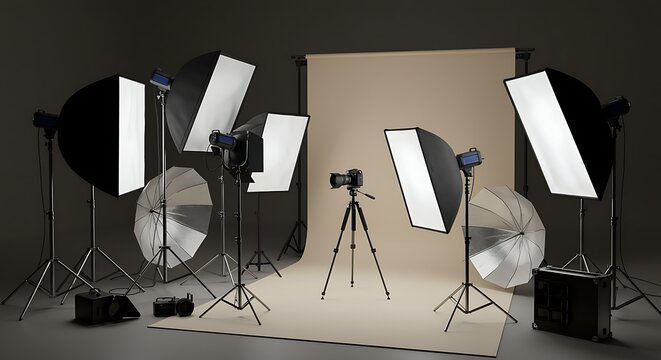
Continuous Lights: Continuous LED lights are an excellent place to start for beginners. They improve learning and modification by enabling you to see exactly how the light is falling on your subject. Find a kit containing softboxes, stands, and at least two lights.
Strobes/Flashes: Once you've mastered the basics, consider investing in a studio strobe kit. Strobes provide a powerful burst of light, allowing you to control and shape the light with more precision.


The Accessories & Support System
Even little things can have a big impact on your photo session. Enhancement comes from thought-it designs more than a pure rockstar item. Watch the bones of the system just as closely as the body.
Tripod: Used properly, the tripod becomes the unsung star of e-commerce product work. Its trip-stop guarantee of leveled look repeats your work, saving time and brain energy. For flat lays, a tripod fitted with a side-arm crosses the center over the board, allowing an organized, repeatable view without ruining the prop.
Light Modifiers: In just a few seconds, a softbox, umbrella, or reflector can transform harsh sunlight into gentle, attractive portraits. A collapsible 5-in-1 reflector is the best option for portability and value; versatility doesn't get any cheaper.
Memory Cards & Storage: Use a CFexpress card with the R5 for speed, then back everything to a rugged external hard drive. These files are your portfolio—protect them like a pro. Striping those buffers before the shoot means peace of mind, not holes in your archive.


Comments